Admitted vs E&S (Surplus Lines) Insurance: Which Does Your Business Need?
The difference isn't about quality — it's about how the carrier is regulated and what risk it's willing to take.
Admitted vs E&S insurance: the short answer
When you buy commercial insurance, the coverage comes from one of two kinds of markets: admitted or excess and surplus (E&S), also called surplus lines. The difference isn't about quality — it's about how the carrier is regulated and what kinds of risk it's willing to take.
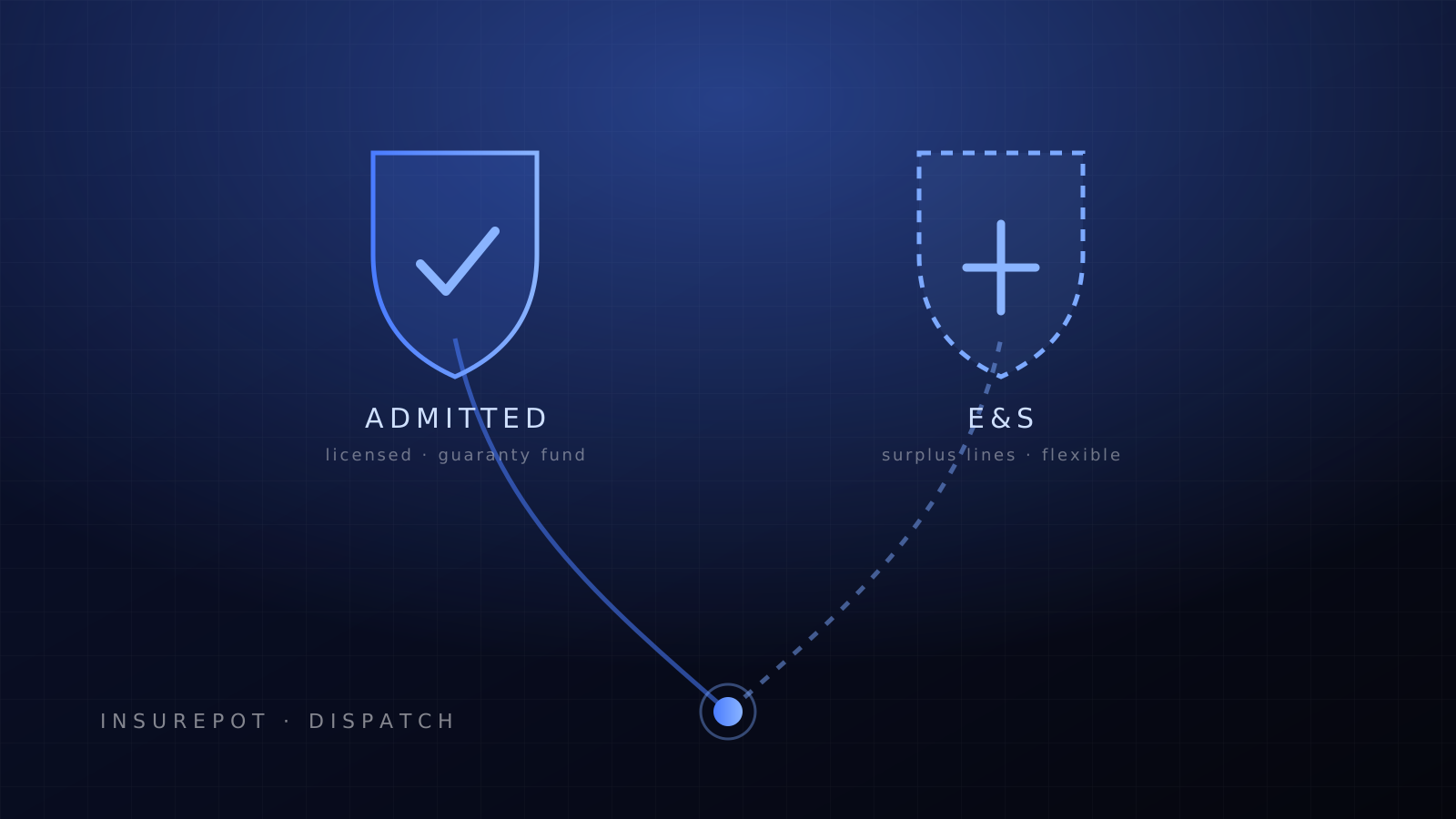
- Admitted carriers are licensed by your state's insurance department. Their rates and forms are filed and regulated, and policyholders are backed by the state guaranty fund if the insurer fails.
- E&S carriers are not licensed in that same way. They can write coverage the standard market won't, on flexible terms — but they aren't backed by the guaranty fund, and their premium carries a surplus lines tax.
When admitted coverage is the right fit
The admitted market is the default for standard, well-understood risks: a typical office, retailer, or contractor with clean history and common exposures. The upsides:
- Rate stability and regulation. Forms and pricing are filed with the state.
- Guaranty-fund protection. If the carrier becomes insolvent, the state fund steps in, up to statutory limits.
- Familiar, standardized policy forms.
If your business fits neatly into an insurer's appetite, admitted coverage is usually cheaper and simpler.
When you end up in the E&S market
E&S exists for risks the admitted market declines — not because they're uninsurable, but because they're unusual, higher-hazard, or lack the loss history a filed program needs. Common triggers:
- A new or fast-changing business with no track record
- High-hazard operations (certain contractors, hospitality that serves alcohol, manufacturing)
- Prior losses or a coverage gap
- Unusual exposures a standard form doesn't contemplate
The trade-offs of E&S:
- Flexibility. Underwriters can tailor terms, limits, and exclusions to the specific risk.
- Capacity for hard-to-place risks. You can get covered when the standard market says no.
- No guaranty-fund backstop, and a surplus lines tax or stamping fee on the premium.
- More manuscript language. You have to actually read the form, because it isn't a filed standard.
Signs you're headed to E&S
You're likely looking at a surplus lines placement if you've been non-renewed, if multiple admitted carriers have declined, if your industry class code is flagged as high-hazard, or if you need a limit or endorsement the standard market won't offer.
Getting placed in the right market
The practical challenge is knowing which market to approach before you waste weeks. Good placement starts with reading the risk — class, history, exposures — and routing to admitted carriers first, then to the right E&S markets when the standard market won't bite.
InsurePot does exactly that: it assesses the submission and routes it admitted-first, with an E&S fallback, so hard-to-place risks still land somewhere.
Have a risk the standard market keeps declining? Book a demo to see how InsurePot places it.
Ready when you are
Commercial insurance, without the friction.
See how InsurePot quotes, binds, and services commercial lines — faster, with more control.
Book a demo